Seduction of the Innocent is a book by German-born American psychiatrist Fredric Wertham, published in 1954, that warned that comic books were a negative form of popular literature and a serious cause of juvenile delinquency.
The book was taken seriously at the time in the United States, and was a minor bestseller that created alarm in American parents and galvanized them to campaign for censorship.
At the same time, a U.S. Congressional inquiry was launched into the comic book industry.
Subsequent to the publication of Seduction of the Innocent, the Comics Code Authority was voluntarily established by publishers to self-censor their titles.
A treatise on the most poorly-remembered show of the 80′s
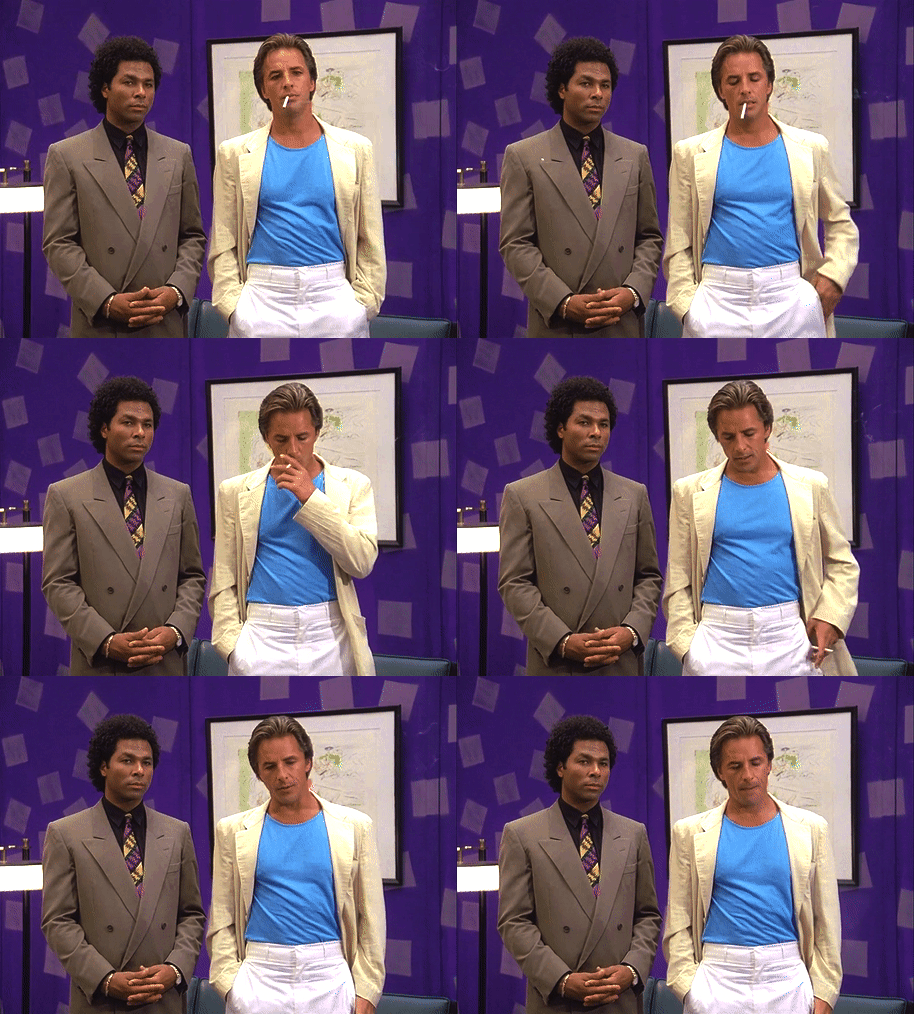
If you’re like most people, when you hear Miami Vice outside the context of a bar, you picture the following: shoulder pads, speed boats, bikinis, and pink and teal pastel. You probably think about the worst excesses of the 1980′s, of a kind of cultural sinkhole where there was nothing cooler than Ray-Bans and masculine posturing.
However, much like Captain Kirk is (mis)remembered as a sleazy womanizer, and the first Rambo movie is (mis)remembered as a paean to how AWESOME KNIVES ARE, Miami Vice has been frozen in pop-culture memory as something it really isn’t. A funhouse mirror reflection of what it was actually all about. Because the thing is: Miami Vice is good. Like, really good.
At its core, it’s a show that is:
Well-written, with a coherent emotional and thematic arc across its seasons, despite being made before the era of arc-based TV
Incredibly beautiful, with cinematography, directing, and musical/sound editing choices that literally changed the way television was produced
Deeply, sometimes painfully human, with main characters who are often wrong and/or make bad decisions with real consequences, and who often ‘lose’
And on top of that, it’s not really copaganda (no, really), and it’s pretty damn queer (yes, really.) It’s also an old-school episodic show, which means the characters have a ton of space to breathe and grow and be multi-faceted, and the production has room to experiment, both with technical stuff and the writing. There are episodes that are so deadly serious your mouth feels dry as the credits roll; there are weird, silly, fun episodes where utterly bonkers things happen; there are episodes that feel like David Lynch was moonlighting as director. It’s neo-noir, it’s magical realism, it’s a workplace comedy, it’s a treatise on how there’s no reforming unjust systems, it’s a love story about two men who refuse to grapple with the idea that they’re the most important thing in each other’s lives.
You should watch it. But let me keep trying to convince you, anyway.